 news
Rip, rip hooray: China taken to task, but will anyone listen in Zimbabwe?
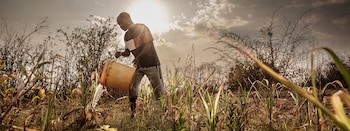
The never-ending search for precious minerals in rare earth is causing the destruction of many of Zimbabwe’s most beautiful places.
Aided and abetted by local politicians and business people, the Chinese rip up the landscape with no care for the sanctity of eco-protected areas or nearby communities and schools overcome with suffocating clouds of dirt and dust and the dangerous reek of noxious chemicals. ANGUS SHAW reports on the frightening amount of damage being done to some of the most beautiful parts of Zimbabwe.
Conservationists have submitted a damning report to Chinese authorities asking for immediate action to rein in destruction across the country that desecrates Zimbabwe’s natural beauty and tourism potential.
No mining investment, regardless of the nationality of its owners, should be permitted to operate above the law or at the expense of the safety, dignity and environmental rights of local communities, says the Centre for National Resource Governance.
Chinese companies should meet the same standards of responsibility and legal compliance that would reasonably be expected within China itself, the group continues. Would the blasting and ravaging of sites of comparable national, cultural or ecological significance be permitted in China?
Precious countryside vistas here bear the scars of massive and intensive mining, using heavy digging machinery, for gold, lithium and other precious materials. While these activities ‘involve politically connected and influential Zimbabwean individuals and entities’ Chinese involvement cannot be ignored, says CNRG.
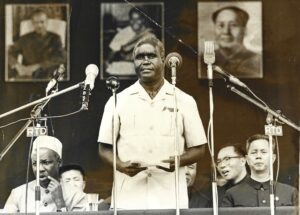
Presidents Nyerere and Kaunda were two of China’s best friends – but that was long before the Zimbabwean environment was threatened during the search for precious minerals
It is difficult to reconcile the destruction of environmentally and culturally significant landscapes with the principles of friendship, solidarity and mutual respect that underpin Zimbabwe-China relations, the group goes on in diplomatic-speak passed on, in theory at least, to Beijing through the Chinese embassy in Harare. Much of the stolen wealth is smuggled out without going into the national fiscus.
To those familiar with geography, the great striations of newly created wastelands range from Christmas Pass, the once breath-taking descent in the eastern highlands to the city of Mutare and the Mozambique border, to nearby Penhalonga and the Mutare river basin, west to Shurugwe and the sacred Botorekwa mountains, north to the Mavuradonha Wilderness declared a National Monument in 2017. The list is endless.
Local communities report cracked walls in homes and buildings from reverberating mining explosions, choking air pollution, fears of cyanide and mercury poisoning, blockages of rivers and streams, the hazard of unsafe mine shafts and open cast digs left open, increased soil erosion, the displacement of wildlife and the total lack of ‘rehabilitation’ of exploited sites left in ruin.
China is a world geo-political force to be reckoned with. Latest estimates put the number of Chinese nationals in Zimbabwe at around 300,000, more than the white minority at independence in 1980. It is no secret that many of them, like many Russians, don’t warm to black people yet scores arrive at Harare airport each week.
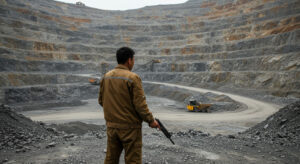
Chinese technicians are involved in building projects as well as the hunt for precious metals in rare earth.
Aside from mining, the Chinese are involved in huge building projects. Many reside in barracks-type complexes springing up in towns and villages. Their intolerance of local office staff and workers is well documented.
Aron (not his real name) works at a gold dig near Masvingo in the south. Big black cars arrive every evening to collect gold that has been retrieved that day. The workers sleep under open skies and receive a pittance to buy food and essentials that attract destitute village girls willing to sell sex.
Yes, China is putting in investment cash on generous lending terms but, as seen elsewhere on the continent, if the loans aren’t repaid in time China assumes ownership.
ANGUS SHAW is a Zimbabwean author and journalist based in Harare.
