 news
newsSusan Paul: The insider who documented the life and times of Sir Garfield Todd
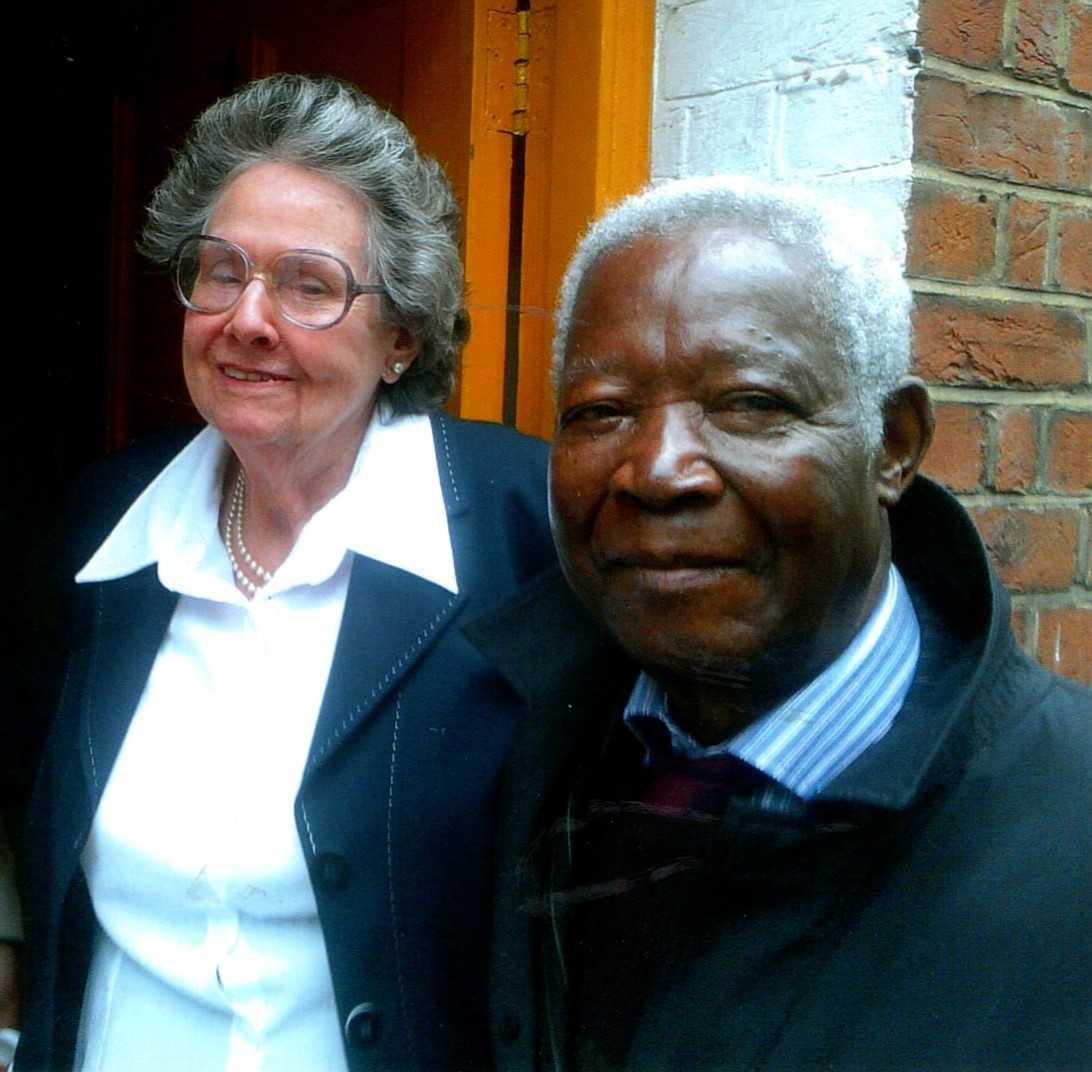
Susan Paul in London with the late Lawrence Vambe MBE who wrote the Foreword to her 2018 biography of Sir Garfield Todd. (Picture: Trevor Grundy)
Susan Paul (nee Woodhouse) has died in Scotland at the age of 97. She was the author of an important book about a man who tried to end all white rule in Rhodesia after the Second World War, a prominent liberal leader who spent years in either prison or house arrest after holding the position of prime minister from 1953-1958.
Published in 2018 by Weaver Press in Harare and launched in Edinburgh that year it was called Garfield Todd – The End of the Liberal Dream in Rhodesia.
It was widely read and well- reviewed in the London Review of Books, the Financial Times and the BBC and is today on the bookshelves of scholars, historians and students in Zimbabwe, South Africa and other parts of the English-language speaking Commonwealth.
Susan Paul was born at Blandford in Dorset, England in 1929, the daughter of Brigadier L.J. Woodhouse, Dorset Regiment. Her family were scions of one of England’s largest breweries, Hall and Woodhouse.
In her teens, this upper middle-class girl was a pupil at one of England’s most exclusive schools, Cheltenham Ladies College. She excelled in English literature, the classics and the carefully monitored “modern novels” approved by school boards as suitable for “gals” who would soon join the English elite, thanks to carefully arranged marriages.
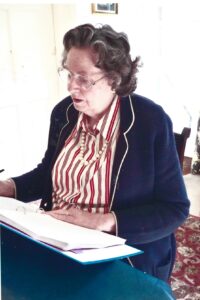
Susan Paul (she wrote under the name of Susan Woodhouse) at work on her biography of Garfield Todd while living at Gifford, East Lothian, Scotland in 2007. (Picture: Trevor Grundy)
Oxbridge was on the cards for this talented woman. But Susan Paul chose another path, and worked as a secretary (mastering shorthand and typing) for a film studio in Soho, London, before leaving with her parents in 1948 for a new life in Rhodesia.
Bored with white life in Salisbury (she often said it was ‘a triumph for mediocrity’) she returned to London where she became engaged to a Rhodesian tobacco farmer. The affair didn’t last long and in 1956 her life changed and would never be the same again.
Because of education, she was engaged in Rhodesia as a personal assistant to the prime minister, Garfield Todd.
She was 27 and Todd was a sort of father figure at 48. His wife, Grace, was 45. The Todds were New Zealand missionaries, admired in Fabian and liberal circles but detested by most Rhodesian whites who were enjoying blazers, club ties and tennis courts for the first time. They were looking for leaders who’d keep things that way for at least the next thousand years.
Thanks to her relationship with the Todds, Susan Paul was able to travel in comfort around a country that was between 1953-1958 key to the success (or failure) of the British-designed Central Africa Federation (CAF) which joined the two Rhodesias (Southern Rhodesia/Zimbabwe and Northern Rhodesia/ Zambia) to Nyasaland (Malawi).
Partnership was the name of the game.
An earlier chance to join Rhodesia with South Africa had failed but there is no doubt at all that the vast majority of whites in Rhodesia at the time of Garfield Todd saw two permanent factors in Africa – one was Nigeria and the other was South Africa.
For the Todds – and for Susan Paul – South Africa’s racist system was anathema – something not reformed, just destroyed.
As every Zimbabwean student of African politics and affairs knows, the CAF faded away in 1958.
So did Garfield Todd as prime minister.
His hastily re-formed United Rhodesia Party won no seats in the subsequent general election and he left government to become a cattle rancher before metamorphosing after his death in 2022 into a liberal legend.
Strangely, it was his fall that led to his rise. His place in Africa remains little known but massively respected by most of the late Zimbabwean greats – Lawrence Vambe, Stanlake Samkange, Robert Mugabe, Josua Nknomo, Ndabaningi Sithole, James Chikerema, George Nyandoro and so many other self-sacrificing men and women who made long-deferred dreams come true in April 1980.
After all all white cabinet got rid of Todd, Susan Paul’s civil service career came to an abrupt halt.
In July 1959, she took up and offer made by Garfield and Grace to live with them at Hokonui Ranch in Matabeleland.
She was with them from then to 1965 when doctors diagnosed Susan’s mother with a terminal illness. She died in November that year (the year of UDI).
In 1965 Susan returned to Rhodesia to look after her father and worked at Ranche House College for Ken Mew before falling seriously ill herself.
After a long rest, she returned to work as secretary to the Anglican Bishop of Mashonaland and it was in that job that she met a much younger than Todd missionary called John Paul who had worked at Messumba Mission in Mozambique.
He was the author of a book commissioned by Ronald Segal called ‘Mozambique: Memoirs of a Revolution’ published by the Penguin African Library in 1975.
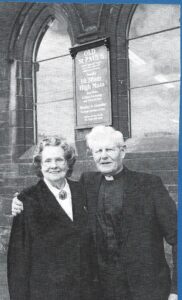
Susan and John Paul outside Old St Paul’s Anglican Church in Edinburgh in 2008 (Picture: Trevor Grundy)
Susan and John were married shortly before Christmas at the Anglican Cathedral in the then Salisbury in 1969. The following year, the couple left Africa. John became a deacon in the Scottish Episcopal Church. Susan worked for various Christian organisations in Commonwealth countries.
Her links with the Todds never floundered.
She visited Zimbabwe so many times staying with Garfield, Grace and daughter Judith at Hokonui Ranch and watching a country once run by whites move forward under black control.
During one visit in 1992 Garfield asked her to write their story. He told her, “My life is but the thread which connects so many interesting people and events.” He said that she knew the family and what they had experienced in Rhodesia better than anyone else.
Susan told me while we were working on her book at her home in Gifford, East Lothian, Scotland from March 2006 until December 2009, “It has been a long haul: I visited Zimbabwe ten times, spending many weeks on Garfield’s papers in the National Archives of Zimbabwe and interviewing surviving friends and colleagues. I spent a month in New Zealand and also visited the places in Scotland connected with the families of Garfield and Grace.”
Her book struck a match that lit up a little known period of Zimbabwean history.
And the story continues.
All of the Todd paper gathered over the decades by Susan Paul will soon be available to young Zimbabwean historians and will be contained at the Bodleian Commonwealth and African Collection at the University of Oxford.
On February 13, 2003, in the company of Lawrence Vambe, I attended a service of celebration of the lives of Sir Garfield and Lady Todd at the famous London church next to Trafalgar Square, St Martin-in -the -Fields.
The “great and the good” from the British government attended and heard church leaders, senior officials from the Commonwealth and floor foot soldiers like Judith Todd speak with love and respect for the couple who helped change a country and whose achievements are recorded forever in a work by a little known woman whose final hope (she joked with friends) was to reach 97 and then “fly off towards heaven.”
Those who knew and loved Susan Paul are certain she will receive a warm welcome.
Obituary by Trevor Grundy which appeared first in The Standard, Harare, Zimbabwe on 18 October 2026
Susan Paul (nee Woodhouse): Biographer of Sir Garfield Todd Born in Blandford, Dorset, UK on 10 October 1929: died at the age of 97 on 11 October 2026 at the Royal Infirmary, Edinburgh, Scotland.