 news
Charles gets ready to face a wave of criticism over Britain’s refusal to pay reparations to the descendants of the slave trade
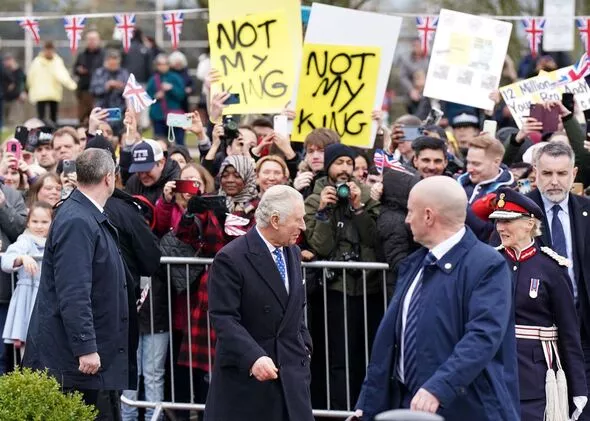
People in Britain and other parts of the Commonwealth are increasingly hostile towards the monarchy as an institution.
King Charles’s visit to the Caribbean starts today. He will visit three countries in nine days: the Bahamas, Guyana and finally Antigua and Barbuda where he will open the 28th Commonwealth Heads of Government Meeting (CHOGM) which is held every two years. TREVOR GRUNDY reports –
Antigua and Barbuda is the smallest country to host CHOGM which will celebrate its 45th anniversary during the four-day Caribbean talk-shop.
The Commonwealth represents 2.7 billion people in 56 countries in Africa, Asia, the Americas, Europe and the Pacific. Most of them are former members of the British Empire.
This year’s CHOGM will throw Charles into the heart of a debate over the payment of reparations- compensation from countries that took part in the slave trade which saw the enslavement of an estimated 13 million Africans.
The king will be asked to apologise for British participation in the trade which helped create some of Britian’s wealthiest cities (London, Bristol, Glasgow and Liverpool) and a countless number of big business “swells.”
The historian Sir Anthony Seldon said on the eve of the king’s departure that Charles faces the biggest risk of his reign. He added that the king is “extraordinarily empathetic” and capable of playing what he called in cricket parlance “a blinder” at this year’s CHOGM.
But watch out, warned the peer.
“Questions about slavery, repatriations and apologies mean the moral integrity of the monarchy is being questioned,” he said.
Media royalists bang on about how in 1807 the British Parliament passed the Abolition of the Slave Trade Act. That ended the buying and selling of enslaved people within the British Empire but it did not immediately protect those already enslaved. Many enslavers continued to trade illegally.
On August 28, 1833 the British Parliament passed legislation that abolished slavery within the British Empire emancipating more than 800,000 enslaved Africans.
As part of the compensation that helped secure legislation abolition the British Government agreed to a generous compensation package of £20 million (at 1807 prices) and the money went to slave owners for the loss of their property. (Source: Bank of England staff working paper Number 1,006).
This week, senior royal aides have been telling reporters that the king will not shy away from the darkest days of Britain’s past. But they all stress that repatriations is a matter to be decided by the British government, not the monarch who is also Head of the Commonwealth.
Silence is what anti-monarchists expect and silence is what they’ll get.
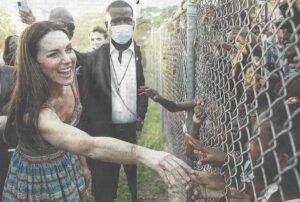
Kate with well-wishers during an embarrassing “getting to know you” moment in Jamaica in 2022
A BBC reporter, Daniela Ralph, said that the planning behind the royal trip to the Caribbean has been meticulous.
Lurking in the background of royal public relations minds will be memories of the last tour by senior royals – Prince William and Kate – to the Caribbean in the early parts of 2022.
The couple were turned into figures of colonial fun as they reached out to touch outstretched hands of Jamaican children who were hidden from view behind a large wire fence.
Engagements designed as tributes to past royals – looked ridiculous.
Ordinary people want down-to-earth talkabouts by leaders, not more embarrassing walkabouts by royals.
There is mounting discussion about the meaning of the Commonwealth and whether the two-year meeting is anything more than a four-day talk shop for rich and remote men and women who run impoverished countries.
Anti-monarchists jokingly say the acronym CHOGM really stands for Comrades Holidays on Government Money.
Thanks to people like Andrew and his ex-wife Fergie the image of the British royals is at an all- time low.
Fasten your safety belts, folks. Charles and Co could be in for a bumpy ride.