 news
Tanzania: Hundreds dead, thousands injured in a country where anti-terrorist laws are weaponised to silence government critics
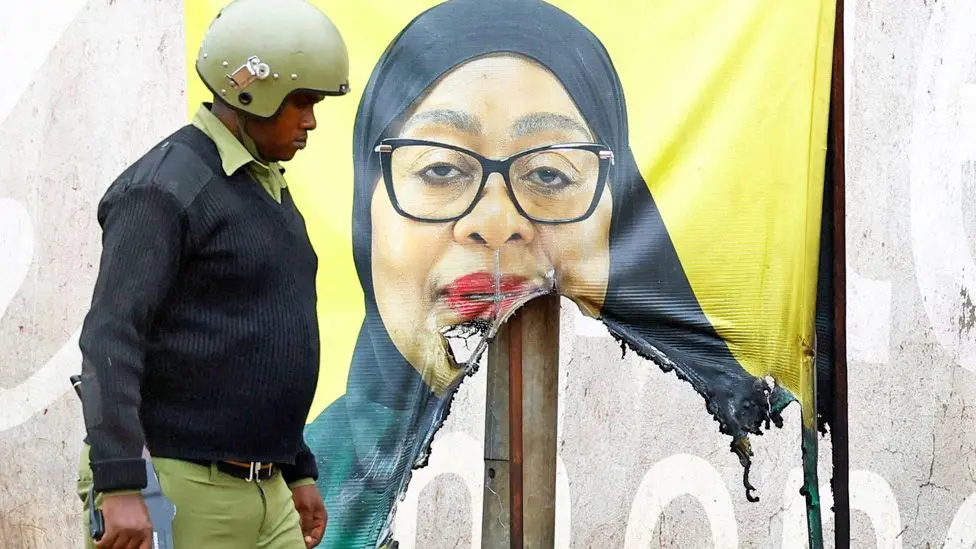
President Samia Sululu – weaponizing anti-terrorism laws to silence her critics.
A report released today by Amnesty shows that the Tanzanian authorities have failed to hold anyone accountable for violence of a kind that should outrage the rest of Africa. During and after the 2025 elections hundreds were killed and thousand injured by members of the heavily armed security services. But all we get is deafening silence from African leaders. TREVOR GRUNDY reports –
Amnesty has documented how security agencies have committed human rights violations with impunity against government critics. These include acts that may amount to torture or other ill-treatment, arbitrary arrests, enforced disappearances, abductions, and severe restrictions of freedom of expression and peaceful assembly.
“Not a single official has been criminally investigated, let alone prosecuted and punished for the excessive force that Tanzanian security forces used against protesters,” said Tigere Chagutah, Amnesty International’s Regional Director for East and Southern Africa.
”In fact, the situation has only deteriorated since the crackdown began. In a classic tactic pulled out of the authoritarian playbook, the authorities are increasingly weaponizing counterterrorism laws to silence critics and instil fear.”
Although the Commission of Inquiry report into the 2025 election-related killings was handed over to President Samia Suluhu in April 2026, it has yet to be made public. She has repeatedly alleged that the post-election protests were funded by foreign actors in a bid to overthrow the government.
Hundreds dead, thousands injured as Tanzanians waves goodbye to democracy.
“President Suluhu’s continued refusal to release the Commission of Inquiry report not only entrenches a culture of secrecy, but it also perpetuates impunity,” Tigere Chagutah said.
Between 3 and 17 September 2026, Amnesty International interviewed 17 people, including victims of arbitrary arrests, enforced disappearances and abductions, as well as journalists, opposition officials, lawyers, and friends and relatives of the victims of the October 2025 election-related crackdown. Amnesty International also verified charge sheets for those arbitrarily arrested and charged with terrorism in different parts of the country.
Tanzanian authorities did not respond to Amnesty’s request for comment.
Amnesty International documented numerous cases of individuals being abducted by suspected state security officers, held incommunicado, and later charged in court. Some of them remain missing.
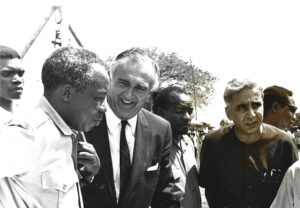
When Julius Nyerere led Tanzania the East African country was seen as a model state aspiring towards socialism (Picture: Trevor Grundy)
Amnesty International documented the frequent abuse of counter-terrorism laws to target opposition supporters and government critics. On 9 July 2026, police spokesman David Misime said 130 people had been arrested for allegedly organizing meetings and preparing and circulating messages that encouraged criminal acts aimed at destabilizing the country. Of these, at least 64 were charged under the Prevention of Terrorism Act, an unbailable offence.
“By resorting to terrorism-related charges against its perceived critics, the Tanzanian government is sending a chilling message that it won’t stop at anything in its effort to repress any and all dissenting opinions,” said Tigere Chagutah.
“The authorities must end the abuse of counterterrorism laws to stifle freedom of expression and peaceful assembly. They must immediately and unconditionally drop all terrorism charges against those unjustly detained and end harassment of individuals solely for peacefully exercising their human rights.”
In February 2026, the Chief Justice issued an order barring lawyers from speaking to the media on cases before the court, violating the rights of lawyers representing their clients, as well as the rights of the media to seek, receive and share information.
Media freedom has also come under increasing and unwarranted pressure.
On 2 April 2026, the Tanzania Communications Regulatory Authority (TCRA) suspended the online-broadcast licence of Jambo Online TV for 90 days, over content TCRA called unverified and misleading concerning the Commission of Inquiry into the October 2025 general-election unrest. Jambo TV’s licence was reinstated and the station returned to air on 3 July 2026, after the 90-day suspension lapsed.
On 19 August 2026, the Information Services Department suspended Mwanahalisi newspaper’s publishing and distribution licence for six months, over a report that Vice-President Emmanuel Nchimbi had rejected calls to resign.
“The authorities must revoke the suspension of Mwanahalisi newspaper, restore access to banned social media platforms, and end censorship of online content. They must also ensure that media outlets are free to operate independently, and that journalists can carry out their legitimate work without fear of reprisals,” said Tigere Chagutah.