 news
November 11: Zambians, Zimbabweans and Angolans remember a date that changed their lives
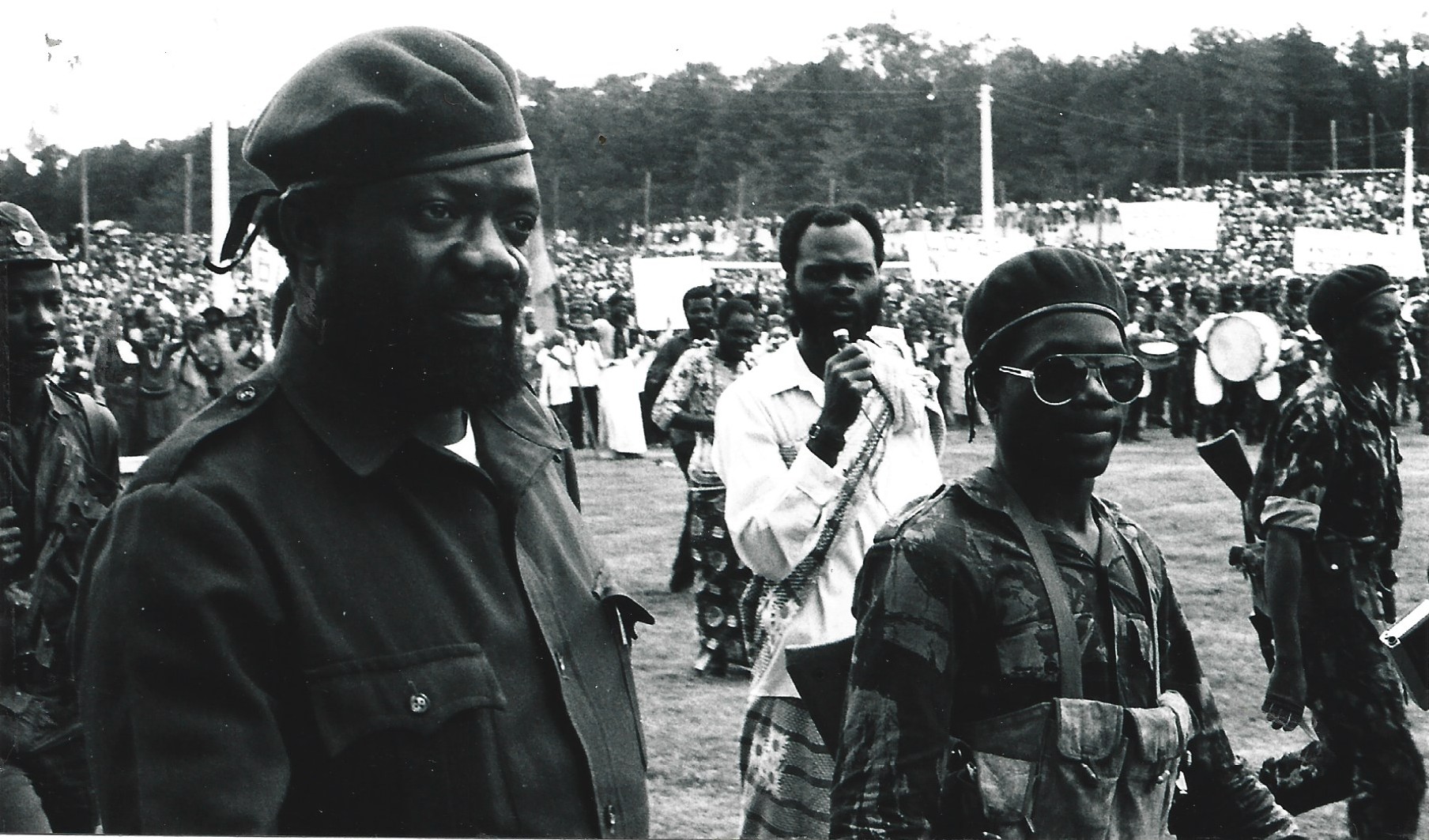
Jonas Savimbi, leader of UNITA, celebrating his version of Angolan Independence at a stadium in Huambo on the night of November 11, 1975 (Picture: Trevor Grundy)
Britain came to a standstill at 11 am today – Armistice Day when Commonwealth countries remember the dead and the maimed of two world wars. TREVOR GRUNDY found himself standing still in a supermarket when bells at the nearby 12th century Beverley Minister in Yorkshire signalled the start of two minutes silence.
I might have been the only man in Yorkshire thinking about Africa and not the Battle of the Somme or Dunkirk at 11 am this morning.
I was in the fresh fruit department at Marks and Spencers and wasn’t wearing a watch when I heard the clock strike 11.
Hundreds of men, women and children froze like stone statues on a parade ground.
In 1975, November 11 was marked by three ceremonies at three different parts of the country.
A devastating civil war was about to start.
In Huambo, the national flag got stuck half way up a long wooden pole in the middle of a football stadium.
Later that day Jonas Savimbi poured champagne into paper cups held by international journalists who had just been told that the South Africans were in Angola and were getting ready to wipe out the Marxist-led MPLA in what was soon to be the new capital of a country with such enormous potential.
Decades of war followed November 11, 1975 in that tragic former Portuguese colony.
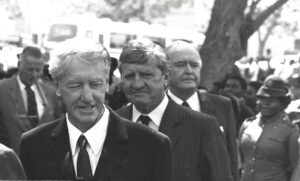
Rhodesia’s Ian Smith leads his supporters into the new Zimbabwean Parliament in 1980. He was the architect of Rhodesia’s UDI on November 11, 1965 (Picture: Trevor Grundy)
November 11, 1965 is a day Zimbabweans as well as Zambians will never be able to forget.
It was the day that the white leader Iain Smith declared Rhodesia’s illegal ‘independence’ (UDI) from Britain which in those days was led by silver-haired, pipe-sucking Harold Wilson.
Rhodesia’s ‘independence‘ also signalled the start of a war that led to the death of at least 35,000 Africans.
The needless disaster only ended in April 1980 with the birth of Zimbabwe.
Waiting for the clock to end two minutes of peace and quiet in a normally feverish English supermarket, I remembered a day in Lusaka in August 1975 when Kenneth Kaunda’s favourite Angolan, Jonas Savimbi of UNITA, was asked by a journalist how Zambians could celebrate his country’s day of freedom on November 11.
It was illegal to party on that day anywhere in Zambia because of UDI celebrations on the other side of the River Zambezi.
The UNITA leader looked up from his desk, smiled and said – “I’ll give you Zambians something that will make you all forget UDI.”
He did that alright but with such tragic consequences.
November 11, 1975 is a day the old like me will always remember and the young like you should never be allowed to forget.