 news
newsZimbabwe: Tragedy at Kariba and a total eclipse of the economy
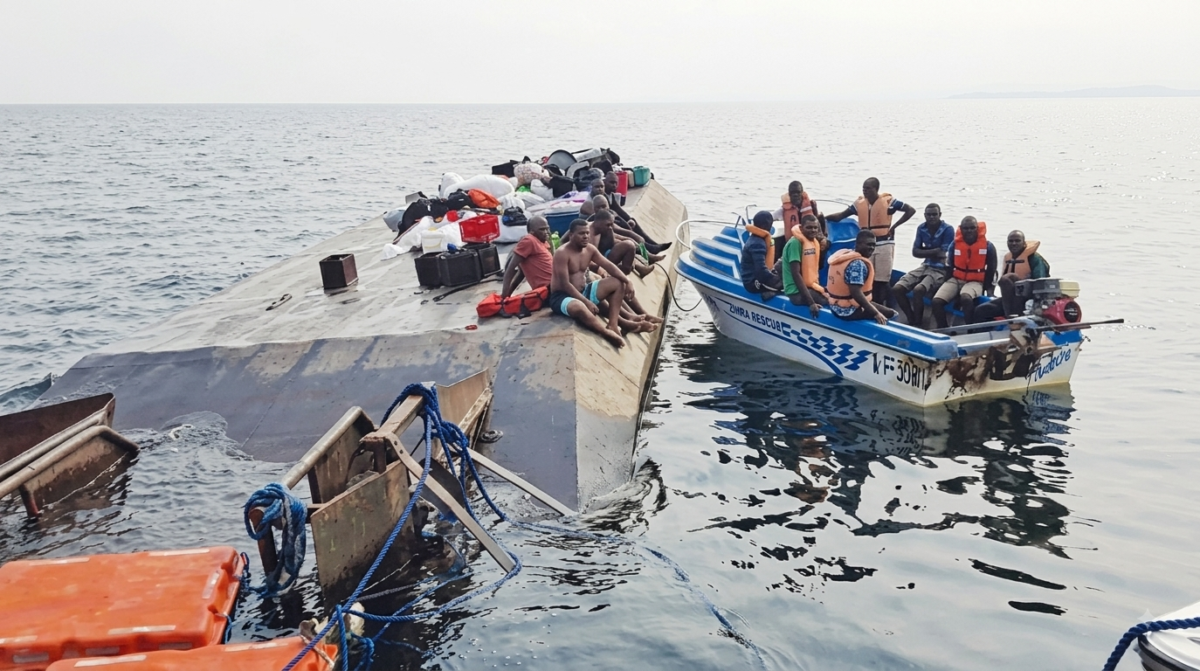
Mercifully, there were some survivors from the Kariba ferry disaster, which should (but probably won’t) draw presidential attention towards the way the super rich and the super-ordinary live, work and travel in Zimbabwe.
The number of people aboard the Mbuya Nehanda ferry when it sank on Lake Kariba has become a key question in the police investigation. Authorities are now trying to establish why the official passenger records do not match the figures emerging from the rescue and recovery operation. The ferry’s manifest listed 120 passengers before the August 11 disaster. Police believe more than 150 people could have been aboard, raising questions about how passengers were recorded and accounted for before departure. The disaster left 97 people dead, while 77 others survived. From Harare, ANGUS SHAW reports –
A total eclipse happens when one celestial body blocks the light of another.
Down on earth, a once successful economy can be cast into darkness by mismanagement and stealing. Political leaders enrich themselves with no regard for the wellbeing of the needy and downtrodden.
Untouchables hold onto power, buying brand new super cars and luxury homes while most of the people suffer deprivations in housing, medical care, schooling and basic food.
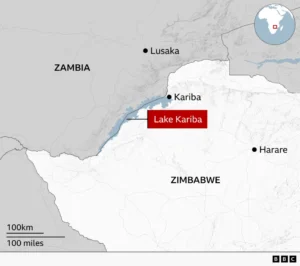
On Kariba lake, one of the world’s largest man-made dams, an overloaded ferry has capsized killing at least 97 people. Even Zimbabwe’s propaganda arm, the state broadcaster ZBC, reported it was carrying 180 passengers including children and mothers with babies strapped on their backs, double the authorised carrying capacity of 90.
Survivors reported that the captain, among the dead, ignored warnings not to venture out into stormy waters that day. Most of those on board were impoverished rural vendors and traders desperate to get fish and other goods from outlying lake shore villages for re-sale
When the storm subsided ill-equipped first responders, joined by tourists on fishing holidays, pulled 77 survivors from the waters where crocodiles thrive. Additional victims are still unaccounted for a fortnight after the country’s worst transportation tragedy.
The ferry had taken on water and terrified passengers shifted to one side to avoid it, hastening the sinking.
With lakeside roads typically impassable, the ferry, owned by the government’s rural development agency, was the only way struggling local communities could work to earn their meagre livelihoods. Especially galling afterwards was the way fat cat politicians headed to the lake in state-of-the-art SUVs to observe the mourning and funeral arrangements there. The regime announced bereaved families are to receive US$100 each in compensation, in total a tiny fraction of visiting vehicles worth US$ hundreds of thousands.
Who in the state apparatus will bear ultimate responsibility is unlikely to be known. Life jackets were in short supply and the vessel, more than 40 years in use, had a questionable history of maintenance and repair.
Sadly, across the land the fat get fatter and the thin get thinner or dead.
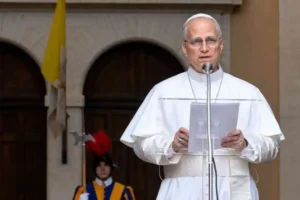
The Pope in Rome leading prayers for the victims of the tragedy on Lake Kariba.
Obscured by the eclipse too are the travails of the country’s 83-year-old president and the first family. The wife of one of his sons is being charged in court for alleged drug peddling, crystal meth, cocaine etc, and money laundering that is said to have left her with a private fortune of US$9,6 million.
The husband, an engineer, miner and dealer in gold, has allegedly been abroad for drug rehab.
Yet political life rumbles on. New buildings – townhouses, shopping malls and petrol stations – are popping up all over, financed by rich and powerful profiteers.
Basic property prices have gone haywire. In Harare’s Mbare township the home shown is priced at more than US$40,000 which, the publicity says, sits on 220 square metres ‘suitable for redevelopment.
Townships are now known as ‘high-density’ suburbs, compared to ‘low-density’ areas of leafy, tree-lined avenues occupied by the well-to-do.
In times of record unemployment and factories and businesses shutting down, ordinary folk lucky enough to still have a formal job (average take home pay US$300 per month) won’t stand a chance of buying in Mbare. Mortgages and home loans were abandoned in recent years of hyperinflation.
The darkness of the eclipse isn’t going away any time soon.
Angus Shaw is a former Associated Press (AP) staffer and author of several books about Zimbabwe.
