 news
This is the future and we know it doesn’t work
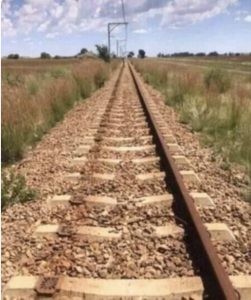
A picture that doesn’t need a thousand words to tell what’s going on in Zimbabwe as hundreds of thousands of tourists wearing rose-tinted glasses flock to the country to gaze at the wonders of the Victoria Falls.
Perhaps the makers of the television series World’s Most Dangerous Roads (available on YouTube) should consider Burundi, Congo, Ethiopia, Kenya, Nigeria and Zimbabwe.It’s only a matter of time before your private car gets dinged or wrecked in the reckless pursuit of speed by drivers in dangerously unroadworthy and overloaded vehicles, many of them unlicenced to drive too. ANGUS SHAW reports from Harare, Zimbabwe
It’s only a matter of time until the inevitable happens.
Doomsayers believe computers will take over the world and increasingly frequent global internet outages caused by overcrowding in cyberspace will continue. Down on earth El Nono and more climate disasters are on the way.
Life will get more dangerous day by day.
Perhaps the makers of the television series World’s Most Dangerous Roads (available on YouTube) should consider Burundi, Congo, Ethiopia, Kenya, Nigeria and Zimbabwe.It’s only a matter of time before your private car gets dinged or wrecked in the reckless pursuit of speed by drivers in dangerously unroadworthy and overloaded vehicles, many of them unlicenced to drive too.
In Zimbabwe the condition of damaged and potholed roads is worsened by fleets of heavy trucks vying for supremacy now that the national railways no longer work. (Right: Stolen rail line.)
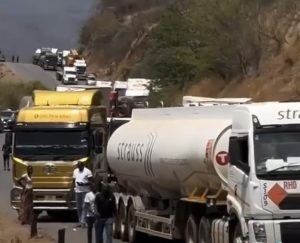
Heavier and heavier tankers on weaker and weaker road surfaces
Pirate minibuses and pirate taxis zoom along like bats from hell. It is truly exhausting for careful and accomplished drivers to move safely from A to B. Money to fix this is not going in that direction.
Foreign visitors are mistaken in saying everything looks rosy. Not long ago it took 3.1/2 hours to reach Lake Kariba about 370 km away but now it takes up to 7 hours on the hazardous main artery to the Zambian border at Chirundu.
The visitors don’t see the extreme poverty that lies behind a current building boom generally financed by illicit deals and money laundering by the few.
Record unemployment has pushed up crime and ‘con-artistry,’ as has the expulsion of fugitive Zimbabweans and alleged illegal immigrants from South Africa, some of whom have smuggled guns home.
If AI doesn’t throw us out of the window beforehand, it is NOT only a matter of time until our water and electricity supplies are restored, or the authorities and police stop soliciting for bribes.

Endnote. We are getting pre-paid water meters, but the inflow of municipal water is so erratic that when it does come on through empty pipes the meter clocks up all the air that pushes through it. This is Chinese technology that charges US$10 for about four cubic metres (4,000 litres) of water, much of it, in my case, being air. Thus, 4k of promised water lasts hardly a day or two. Ridiculous.
Imagine paying for air at a petrol pump. Unthinkable.

In England, Trevor Grundy adds to the story –
Until recently, I lived in Kent, the Garden of England. Three years ago, I bought a rail ticket (return from Whitstable to London) to attend a meeting at Chatham House, the London-based think tank on International Affairs. I was doing a job for Deutsche Welle and had to be in London half an hour before the main speaker, ex Foreign Secretary Malcolm Rifind, arrived to give his talk.
Ten minutes after leaving Whitstable the train stopped.
Three and a half hours later, I asked a man in a railways uniform who was walking up and down the carriages telling people the train would move “soon.”
I asked him what had happened and he looked at me as if I’d arrived from another planet.
“Fucking Albanians,“ he said. “They strip the line for copper and that ‘s why we ‘aint moving.”
And then – “You new to Britain, are you?”
Of course, not all Albanians in the UK strip railway lines for precious copper.
There are many who don’t.
Read on about what BBC reporters have to say about copper thefts along the line today (November 27, 2026) –
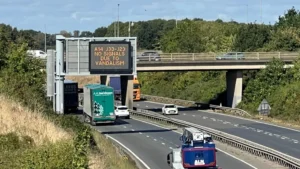
Copper theft disrupts the flow of traffic along many of Britain’s road arteries
Criminal gangs are striking under the cover of darkness to steal copper cables, causing misery across Britain with delays to trains and disruption to broadband and landline phones.
Telecommunications, railways, electric vehicle charging stations and power networks are among the sectors that have been targeted, fuelled by rising copper prices
Network Rail said more than 2,100 hours of delays were caused by the thefts in 2025/26, an 84% increase in a year.
In some cases, criminals are posing as genuine workers to gain access, according to Paul Langley, the company’s head of security, crime and resilience in the southern region.
He said: “They will often wear personal protective equipment to gain access to our infrastructure, so it’s really important we are strict around our security.”
British Transport Police and Network Rail said they carried out security patrols and used drones for surveillance around the network.
“Most of our cables are carrying large amounts of voltage, so it’s extremely dangerous,” said Langley.
Electric vehicle charging networks are among the industries installing anti-theft measures.
Robin Edwards, from the National Infrastructure Crime Reduction Partnership, said: “If we put a lot of enforcement activity around scrap metal dealers, they’re not willing to buy the cable and that reduces the opportunity for criminals to dispose of it.”
The British Metals Recycling Association said criminals were cashing in on the increased value of copper.
A tonne now sells for £9,000, according to chief executive James Kelly – an increase of about 30% since 2024.
“Those criminals will take it to possibly an unlicensed dealer, or try and sell it for cash, or process it themselves,” he said.
“It needs more rigorous enforcement. There are rogue operators in every sector, so it’s really important to root them out.”
So, Zimbabweans aren’t the only people suffering from copper thieves.
But to know that won’t do anything to cheer up weary Zimbabwean motorists on their way from Harare to Kariba this weekend.