 news
newsDecades after political independence, Africans are still walking along a dusty road that leads to personal freedom
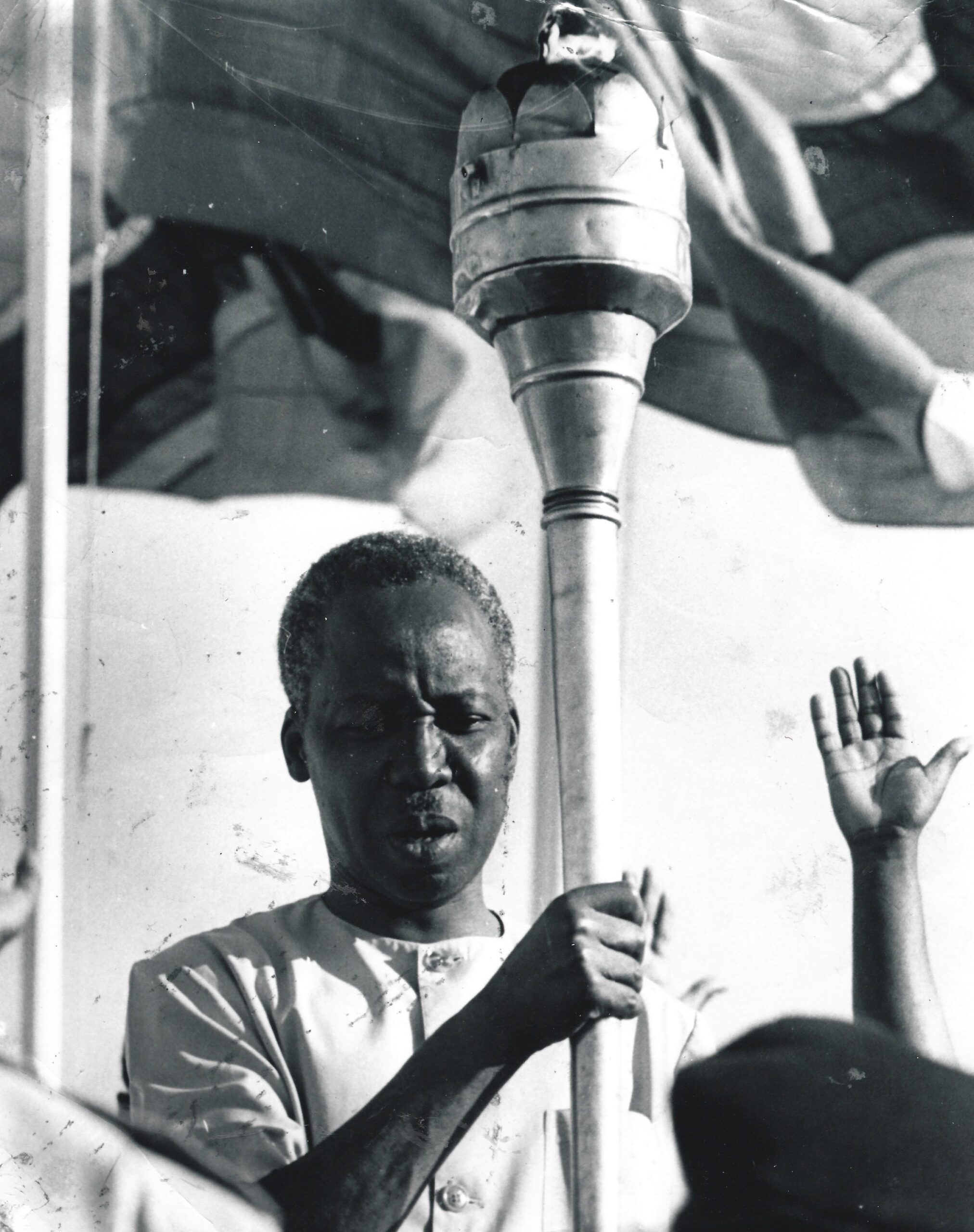
Tanzania’s Julius Nyerere was hailed as a great African socialist and leader, praised by Britain, China and the World Bank (Picture by Adarsh Nayar)
The American country song tells us that ‘freedom is a dusty road heading to a highway.’ Africans know what it’s like walking along dusty roads. But they’ve yet to feel freedom road under their feet. Part of the problem is men and women who believed they alone dismantled white rule decades ago have a right to rule forever. Special Correspondent ANDREW FIELD says more and more people in the world’s largest and hungriest continent are wondering if the promise of freedom for the povo was little more than a lie based on a myth.
FREEDOM is one of the most overworked words in southern African political life. It is invoked with solemnity, defended with anger, and celebrated with gluttonous ritual by the few. Yet when examined closely, it proves elusive, elastic, and often hollow. It is spoken of as though it were a tangible condition, once denied by colonialism and later delivered by liberation. The historical record suggests something more ironic. Freedom, as lived experience, has been selectively present in both eras and fully realised in neither. What changed was not the substance of freedom, but the ownership of power and the language used to justify it.
Colonial rule in southern Africa was undeniably coercive and racially stratified. Political sovereignty lay elsewhere, and the majority population was excluded from meaningful participation in the choice of government. That fact is not in dispute. What is less often examined is how freedom operated outside the ballot box. For many, daily life was governed by predictable rules. Movement was regulated but generally possible. Work, trade, religion, and social life functioned within known limits. Courts enforced contracts. Officials were constrained by procedure and oversight. The denial of the vote was explicit, unjust, and visible, but it did not automatically translate into a total absence of liberty in daily existence.

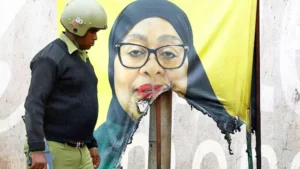
President Samia Hassan claimed 98 percent of votes cast at the 2025 election. Effective oppositions leaders were imprisoned or put under house arrest – a far cry from Julius Nyerere’s “familyhood” version of socialism.
Suppression itself was graded. South Africa’s apartheid system was the most rigidly codified, turning separation into law, bureaucracy, and geography. It was cruel in its exclusions, but it was systematic rather than anarchic. Boundaries were enforced in both directions. White intrusion into black space was restricted, just as black movement into white space was controlled. This was not freedom, but it was a form of order that preserved certain localised freedoms within tightly drawn compartments. The vice of apartheid was not constant terror, but enforced immobility and political exclusion.
Elsewhere, colonial systems varied. Portuguese territories were comparatively fluid in social and economic life, though politically closed. Belgian rule in the Congo was something else entirely. There, freedom in any meaningful sense collapsed. Violence was not incidental but foundational. Extraction replaced administration. That case stands outside any balanced comparison. It was not a denial of freedom by law, but its destruction by force. The Congo became colonialism’s greatest embarrassment and the perfect template for Cold War propaganda. Apartheid too was paraded as proof of oppression, a convenient symbol for ideological theatre.

African leaders like Patrice Lumumba were murdered because they would not play the game with huge mining companies in the Congo after its Independence in 1960
What emerges from this uneven landscape is that freedom under colonialism was not absent so much as constrained and unequally distributed. It was real in some domains, denied in others, and rarely framed as a universal moral right. The language of freedom as an absolute entitlement entered the region later, through politics rather than lived experience. Freedom became a byproduct of indoctrination. Racism and imperialism were the tools used to anger the gullible, and the promise of freedom was the bait.
Decolonisation did not occur in a vacuum. It unfolded during the Cold War, when moral clarity was currency and nuance was a liability. Local grievances were absorbed into a global ideological struggle. Colonialism became synonymous with total oppression. Independence became synonymous with total freedom. This binary travelled well. It unlocked weapons, training, diplomatic recognition, and money. Liberation movements quickly learned that freedom was not just a goal but a narrative weapon. Colonial powers cowered and surrendered, not always because they were defeated, but because the Cold War demanded it.
That narrative hardened into doctrine. Freedom was no longer something to be built patiently through institutions and restraint. It was something achieved in a moment of transfer. Once the flag changed, freedom was declared complete. Any remaining constraint could be blamed on colonial residue or foreign interference. The concept was simplified because simplicity served mobilisation. Complexity invited disagreement. Freedom became a cruel delusion, a slogan that justified permanence.
The irony is that once independence arrived, the narrative could not be dismantled. Liberation movements had no incentive to normalise politics. Normal politics implies alternation, loss, and accountability. The liberation party, therefore, became permanent. It merged with the state, wrapped itself in history, and claimed moral ownership of sovereignty. Power was no longer borrowed from the people. It was earned through struggle and could not be reclaimed. The freedom franchise became good business for the few. Liberators laughed all the way to the bank.

Zambia’s Kenneth Kaunda was one of the few African leaders who stood down with honour and dignity. He was President of Zambia from 1964 to 1991.
Freedom, in this context, shifted meaning again. It became symbolic rather than practical. Constitutions proclaimed rights. Elections were held. The vote existed. Yet the conditions required to exercise choice eroded. Political violence and intimidation replaced legal exclusion as the primary mechanism of control. This was not always overt. It was often calibrated. Opposition rallies were disrupted. Journalists harassed. Courts leaned on quietly. Voters were reminded, subtly or otherwise, of consequences.
This form of suppression is harder to confront because it preserves appearances. The franchise exists, but fear shapes outcomes. Citizens participate in rituals whose results they do not believe they control. The denial of freedom becomes psychological rather than legal. It corrodes trust, initiative, and belief in agency. People withdraw rather than resist. Silence becomes a survival strategy. Obsession with the freedom myth blinded thoughtful voters, who mistook ritual for reality.
Here lies one of the starkest ironies. Colonial franchise systems denied participation openly. One knew where one stood. Post-colonial systems promise participation while undermining it. The former constrained freedom explicitly. The latter simulates it while emptying it of substance. From a human perspective, denial by fear is more corrosive than denial by law. It does not merely exclude. It teaches futility. Were the people ready to vote with a brain rather than the heart? Was denial of the vote unjust, or were the people not ready for it? Until they are ready for real freedom, not the delusion, they are not ready for the vote.
Another contradiction emerges when comparing states born of armed liberation struggles with those that were not. Where independence followed prolonged insurgency, politics often retained a military character. Command structures persisted. Secrecy was normalised. Loyalty outweighed competence. The gun became a moral credential. Parties that fought their way to power rarely view power as conditional. They see it as the spoils of victory.
By contrast, countries that negotiated independence or evolved without sustained insurgency tend, with exceptions, to display greater tolerance for alternation and institutional restraint. Politics there is more transactional. Leaders are replaceable. The state is not sanctified by bloodshed. This is not a universal rule, but the pattern is strong enough to be troubling. Violent struggle may mobilise populations, but it also teaches that force, not consent, is the final arbiter.
Freedom, then, appears less as an achieved condition than as a political slogan that adapts to circumstance. Under colonialism, order justified constraint. Under post colonial rule, freedom justifies power without limits. In both cases, moral language masks control. The difference lies in accountability. Colonial administrations were constrained from the outside. Post-colonial regimes are constrained, if at all, from within. When internal checks fail, there is nowhere else to turn.

Robert Mugabe came to power in Zimbabwe in 1980. Forty six years later and his party ZANU (PF) is still in power. (Photograph by Trevor Grundy)
This explains the persistence of African stagnation and the calculated disguise of colonialism’s structural gains. Development funds are looted. Institutions are hollowed out. Leaders age in office. Yet the language of liberation endures. It must endure, because without it there is no justification for permanence. Freedom cannot be allowed to arrive, because arrival would require normal politics, and normal politics would allow change.
The final irony is historical. Colonialism is rightly remembered for its injustices. But it is rarely acknowledged that it operated within limits. Post-colonial governance removed many of those limits while retaining coercive capacity. External oversight vanished. Law became selective. Power became personal. The result is not greater freedom, but deeper uncertainty. Colonialism was not the mark duped. The people were. What dazzles too easily rarely withstands scrutiny.
Southern Africa’s tragedy is therefore not that liberation failed to deliver perfection. It is that liberation was never primarily about freedom as lived reality. It was about ownership of the state. Freedom was the indoctrination that justified that ownership, and it remains the banner under which it is defended. Until freedom is redefined not as a slogan but as constraint, restraint, and reversibility of power, it will remain a word endlessly invoked and rarely experienced.

Andrew Field (above) is a businessman and former security and market intelligence analyst who continues to research and maintain a private interest in Central and Southern African conflict, politics, economics and society. Previous articles by him appear on a blog called South of the African Equator and the link is – https://justandrewinzimbabwe.wordpress.com